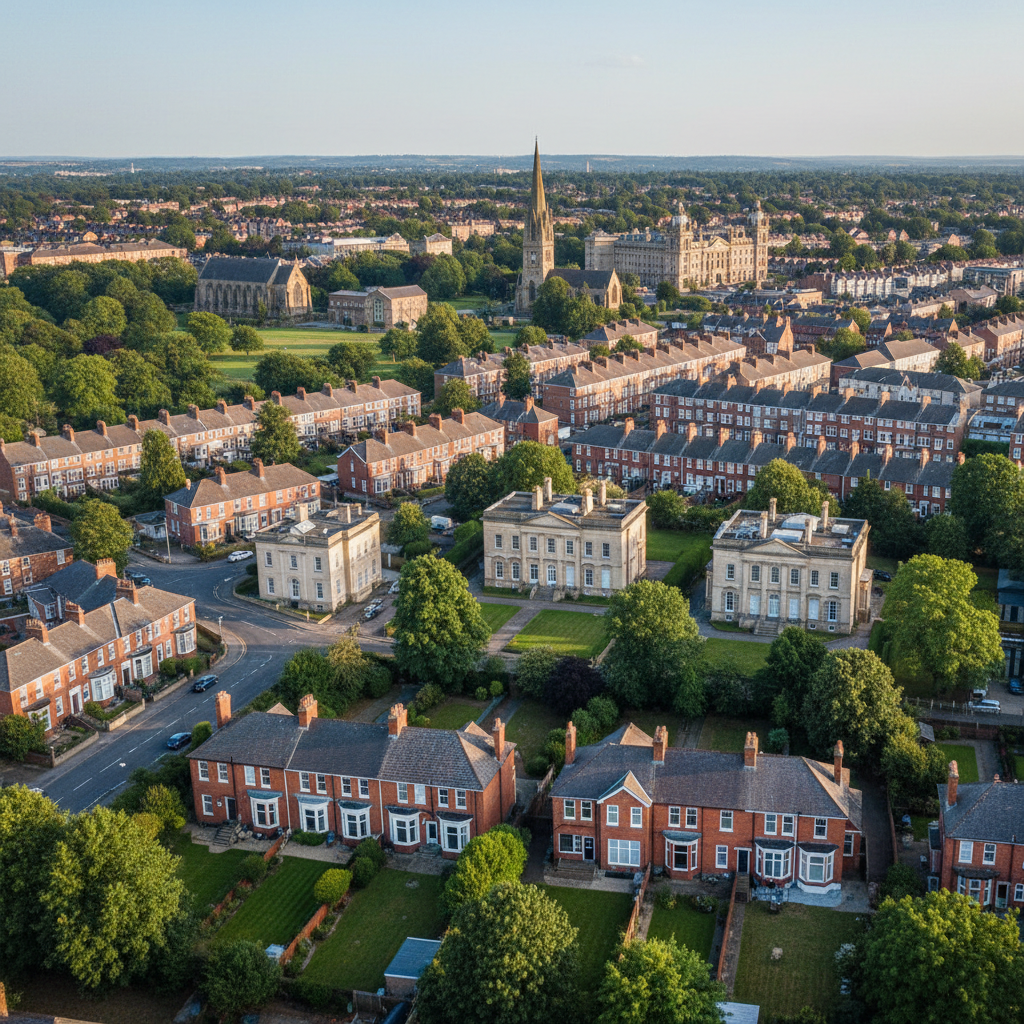
The Great L25 Tug-of-War: Why Your Woolton Semi is Outpacing the Mansions
There’s a persistent myth whispered over garden fences from Gateacre to Hunts Cross: the idea that the grander the house, the safer the investment. It makes sense on the surface—surely a sprawling detached home on New Mill Stile or Quarry Street is a better place to park your money than a modest terrace or a two-bed flat?
The reality in L25 this June is far more surprising. While the national headlines are a bit of a mixed bag—with UK prices dipping slightly by 0.4%—our leafy corner of South Liverpool is telling a story of two very different markets.
The Seven-Year Shocker
If we look back to 2019, the "scorecard" for property types reveals a startling truth. If you had bought a typical semi-detached house in L25 seven years ago, you’d be sitting on a gain of £33,715 today. These homes have been the local champions, growing by 13.2% to an average price of £289,964.
Contrast that with the detached market. Despite prestigious sales like the stunning property at Acrefield Park commanding over £1.1 million, the average detached home in L25 has actually seen its value soften by 3.2% over seven years, dropping from £461,531 to £446,656.
Why? It’s the "Middle Ground" effect. In a world where the Bank of England Base Rate sits at 3.75% and inflation is still lingering at 3%, the "Workhorse of Woolton"—the classic three-bed semi—is the sweet spot for affordability.
The Geography of Value
Walking through the village towards Greendale Road, you can see the ripple effect of national economics in our local bricks and mortar.
- The Terraced Resilience: Our terraced homes, many of them packed with character, have seen a healthy 12.8% rise, now averaging £203,350. For many young professionals, these are the gateway into the L25 lifestyle.
- The Flat Reality: Across the postcode, flats have experienced a more modest 5.7% growth. At an average of £117,750, they remain the most accessible rung on the ladder, but they haven't quite caught the "post-pandemic" wind that drove people toward gardens.
The gap between a flat and a terraced house is now roughly £85,600. That’s more than just a number; it represents the "price of a front door"—the premium people are willing to pay for their own entrance, a small patch of green, and no communal hallways.
Connecting to the National Pulse
Why are the "winners" in L25 the homes priced between £200k and £300k? It comes down to the mortgage market. With monthly approvals nationally sitting at a steady 63,500, buyers are active, but they are cautious.
Earnings growth is currently at 3.7%, which almost perfectly matches our local base rate. This means that while people can afford to borrow, they are opting for the "reliable" property types—the semis and terraces that offer more space than a flat but don't carry the hefty maintenance and cooling-off risks of the top-tier detached mansions.
Marina’s Verdict: What should you do?
If you own a semi-detached or terraced home in L25, you are the current market darling. Demand is high, and inventory is relatively tight (we have about 4.8 months of supply, keeping us firmly in a "seller's market").
For detached homeowners, don't panic. The recent multi-million-pound sales in Woolton prove that the "trophy" end of the market is still moving, but buyers are more discerning. It’s about "immaculate presentation" rather than just "square footage."
If you’re a first-time buyer, the value in L25 flats is genuinely intriguing. With prices only up 5.7% over seven years, they haven't "bolted" like the rest of the market, offering a more stable entry point while you wait for interest rates to hopefully soften later in the year.
As we look toward the rest of 2026, I expect the "middle" of the L25 market to remain the powerhouse. In a world of economic shifts, the humble semi isn't just a home; it’s currently the smartest investment in the postcode.